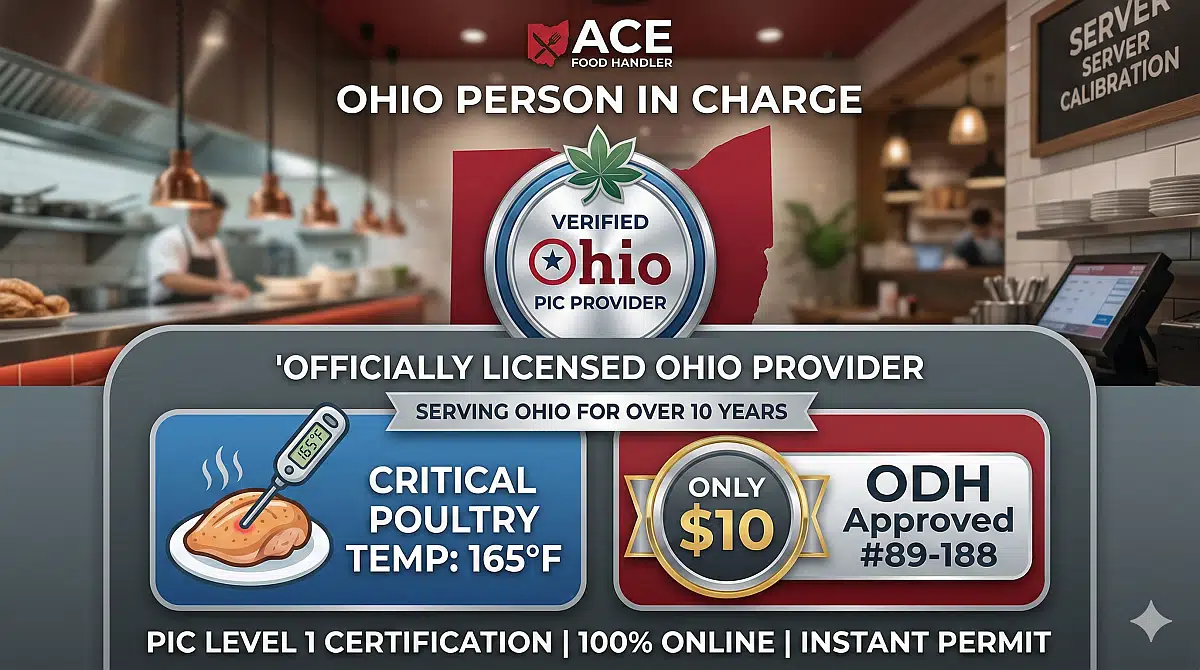

Click to watch the full training video on YouTube.
Why Humidity Matters in the Ohio Climate
Ohio is known for its varying seasons, but the high humidity during the summer months presents a unique challenge for food safety professionals. Humidity increases the moisture content in the air, which can lead to excessive condensation on refrigeration units and food surfaces. When food enters the temperature danger zone, this excess moisture provides a perfect breeding ground for pathogens like Salmonella and E. coli.
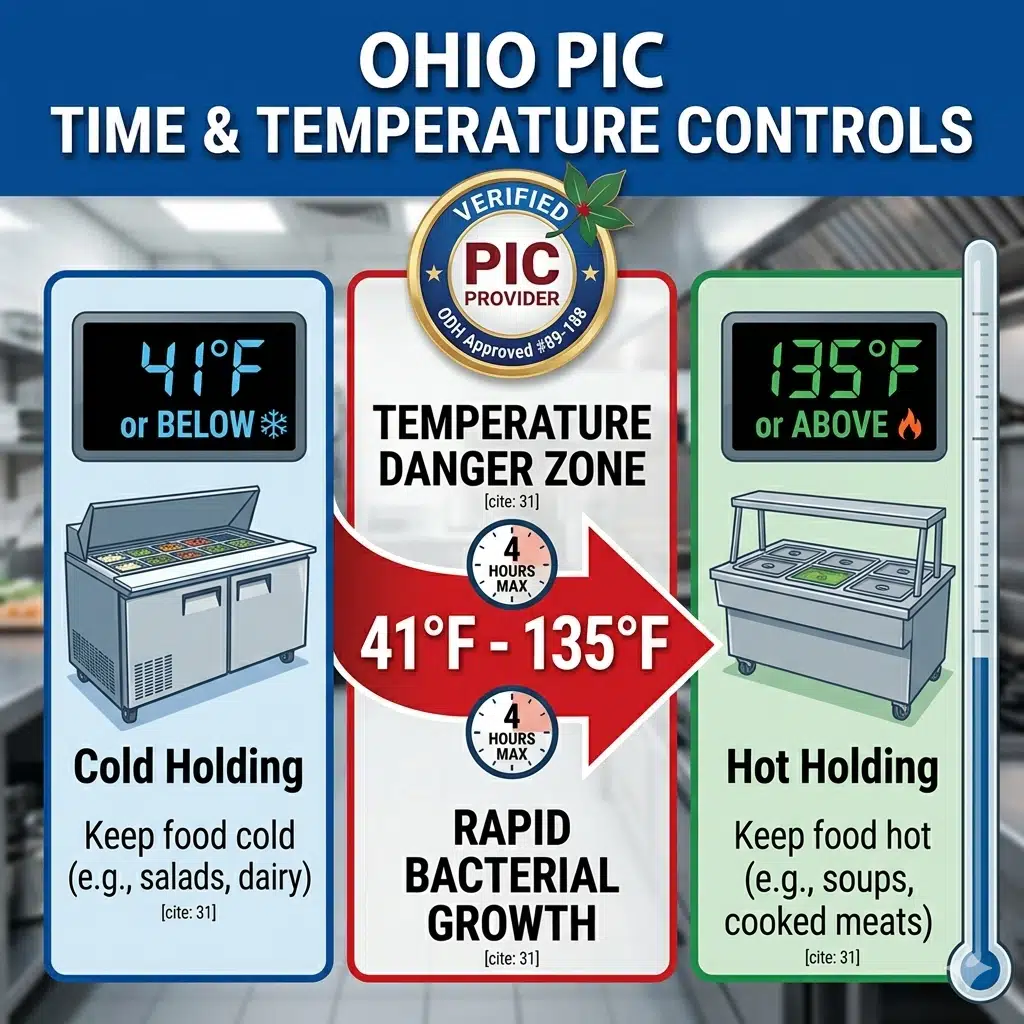
Compliance with the Ohio Uniform Food Safety Code requires proactive monitoring of both ambient air temperatures and internal food temperatures. High humidity can sometimes mask the true temperature of a surface or cause equipment to work harder to maintain the 41°F threshold. Our training emphasizes that Ohio food handlers must be extra vigilant during humid months, ensuring that refrigeration seals are tight and that food is never left sitting on counters where “sweating” can occur.
The Importance of State-Approved Certification (ODH #89-188)
Obtaining your Ohio Dept. of Health (ODH) approved certification is more than just a checkbox; it is about professional accountability and public safety. ACE Food Handler holds license ODH #89-188, offering a curriculum specifically tailored to Ohio’s rigorous safety standards. By investing just 10 dollars in your training, you learn the specific time-limit protocols for keeping food out of the 41°F to 135°F range.
This knowledge is essential for passing health inspections and protecting your customers’ health in every service environment from school cafeterias to high-end restaurants. Knowing how to react when a cooler fails or when a buffet line drops below 135°F is what separates a professional food handler from an untrained one.
Maintaining the Cold Chain and Hot Holding
To effectively manage the temperature danger zone, Ohio food handlers must master “The Big Three”: proper cooling, thorough reheating, and consistent hot/cold holding. Cold foods must be held at or below 41°F, while hot foods must stay at or above 135°F. In Ohio kitchens, this means regular thermometer calibration and diligent logging of temperatures.
The two-stage cooling process is a pillar of the Ohio code: food must be cooled from 135°F to 70°F within two hours, and then from 70°F down to 41°F or lower within the next four hours. This ensures that food spends minimal time in the most hazardous portion of the temperature danger zone. With ACE Food Handler’s $10 course, you receive comprehensive instructions on these procedures, ensuring your facility remains compliant with ODH #89-188 standards. Protect your career and your community by starting your Ohio state-approved training today.
Frequently Asked Questions
Question 1: Is this approved by the Ohio Department of Health?Answer 1: Yes. ACE Food Handler is an officially approved provider for Person in Charge (PIC) Level 1 Certification by the Ohio Department of Health (ODH License #89-188).
Question 2: Does this meet the Ohio uniform food safety code requirements?
Answer 2: Yes. This course satisfies the mandatory ODH requirement that there must be at least one certified Person in Charge per shift in every food service operation.
Question 3: How quickly do I get my Ohio PIC certificate?
Answer 3: Instantly. You can download and print your official ODH-approved certificate immediately after passing the online exam.
Official Compliance & Licensing:
- ✓ Authorized Provider: ACE Food Handler
- ✓ State License: ODH #89-188
- ✓ Issuing Agency: Ohio Dept. of Health
- ✓ Training: Nationally Accepted Certification